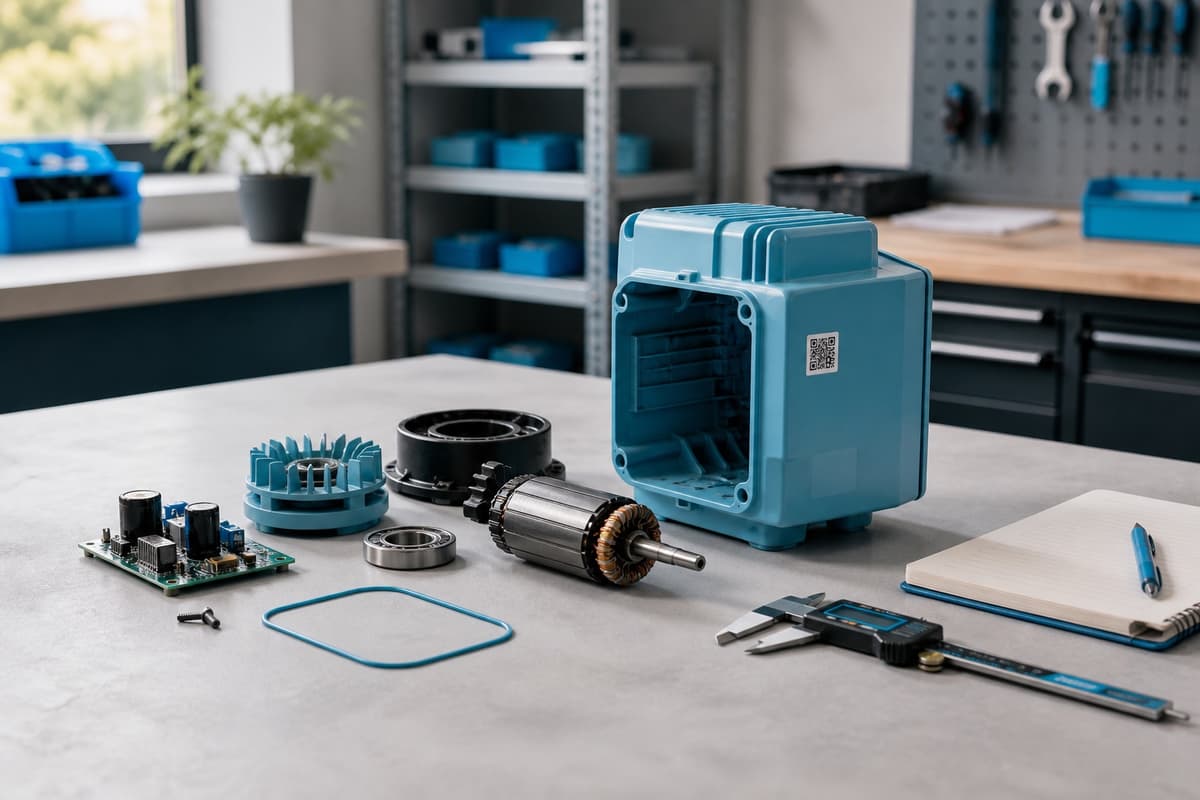
A physical object can outlive the information needed to understand it. The drawing disappears, the material is uncertain, a replacement part has no reference number, or nobody records why an earlier repair was made. The object may still have years of useful life, but the next person opening it has to begin with detective work.
A recently reported six-month trial in Glasgow explored a more systematic answer. The National Manufacturing Institute Scotland, or NMIS, worked with circular-economy business Circulus to test digital product passports in a real remanufacturing environment. Electrical assets were connected to digital records using QR codes, so authorised users could follow information as products moved through repair, refurbishment and recycling.
The trial belongs to an industrial programme, but its practical lesson travels well. Better information can make a physical Project easier to inspect, adapt, repair and remake. Customers and independent Makers do not need to build a complex data platform to benefit from the same principle.
What is a digital product passport?
A digital product passport is a structured record linked to a physical product. Depending on the product and system, it can include identifiers, materials, manufacturing information, maintenance history and guidance relevant to reuse or end-of-life decisions.
The European Commission put its Digital Product Passport Registry and testing environment live on 20 July 2026. The Commission describes the passport as a digital container for product information under the EU Ecodesign for Sustainable Products Regulation. Its rollout is product-specific, with the first stated implementation deadline applying to certain large batteries in February 2027.
That does not mean every UK workshop suddenly has the same legal duty. Product scope, market and role all matter, and businesses needing compliance advice should use the official rules and qualified guidance. The useful point here is simpler: Europe is building infrastructure around the idea that important product information should remain findable and interoperable.
What the Glasgow trial actually tested
NMIS says its ReMake programme aims to keep products and materials at their highest value through remanufacturing, repair and reuse. In the Circulus trial, the team mapped how information moved through existing operations and created a replica of the company's business-management system for testing. The reported aim was to introduce passport records without disrupting day-to-day work.
The published case-study summary says NMIS and Circulus validated the approach for transparency, traceability and regulatory readiness. Trade reporting adds that electrical assets were linked to secure records through QR codes and that a next phase is intended to test the system with major clients. Those are reported outcomes and plans, not proof that the same system will suit every product or workshop.
Research also gives a reason to stay measured. A peer-reviewed University of Cambridge study tested passports in a controlled remanufacturing experiment and found a reduction in cycle time, largely through less variable quality control. It also identified possible negative effects in some environmental and social measures and called for further investigation. Digital records consume resources and require careful design. More data is not automatically better data.
The small-workshop version starts with a useful record
For a one-off object or small-batch Project, the passport principle can begin with an ordinary folder, label or shared record. The right contents depend on the object, but a useful starting set could include:
- a clear name and version for the object;
- overall dimensions and critical measurements;
- known materials and finishes;
- photographs before assembly and after completion;
- drawings, CAD files or templates needed to reproduce a part;
- standard component references and where they fit;
- maintenance or repair notes, with dates;
- known limitations, hazards and unresolved questions;
- the date and reason for any modification.
This is editorial guidance, not a universal technical specification. Safety-critical, regulated or warrantied products may require formal records, controlled access and specialist advice. Personal details, confidential designs and security-sensitive information should not be placed behind a public QR code.
The discipline still helps with everyday work. If a Maker fabricates a custom bracket, recording the material, thickness, hole spacing and finish gives the future owner a better starting point. If a textile specialist makes a fitted cover, a pattern version and fabric reference may make later repair possible. If an obsolete plastic component is remodelled, the CAD version and test notes can explain what changed after the first print.
Why this matters before anything is made
Good records are not only for the end of a product's life. They improve the conversation at the beginning of a Project.
A Customer rarely needs to arrive with a complete technical pack. Clear photographs, approximate dimensions, intended use and a description of what must change can be enough to start. A Maker can then identify which measurements are critical, which uncertainties need testing and what should be recorded for the next version.
That creates continuity between prototype and finished object. Without it, a successful adjustment may live only in someone's memory. With it, the second part, later repair or small production run can begin from evidence rather than guesswork.
There is also a useful boundary. A record cannot make an unsafe design safe, confirm an unknown material or replace inspection by a competent person. It can only preserve what has been checked, observed or decided. Uncertainty should be recorded honestly rather than filled with assumptions.
Leave a trail for the next Maker
The Glasgow trial is a timely demonstration of digital product passports in remanufacturing, not a claim that every object needs a sophisticated platform today. Its broader lesson is practical: the value of a made object includes the knowledge that helps someone understand it later.
If you have an object that needs adapting, recreating or improving, gather what you know before posting a Project: photographs, dimensions, intended use, existing files and the history of earlier changes. Need It Made connects those with a Project idea with those who can bring it to life. The right Maker can then ask better questions, choose an appropriate route and help decide what information should stay with the result.
Sources
- National Manufacturing Institute Scotland: Circulus DPP case-study listing
- National Manufacturing Institute Scotland: ReMake programme
- European Commission: The Digital Product Passport Registry is now live
- University of Cambridge Repository: Evaluation of the Digital Product Passport for Remanufacturing
- Production Engineering Solutions: Digital product passports proven in real-world remanufacturing trial