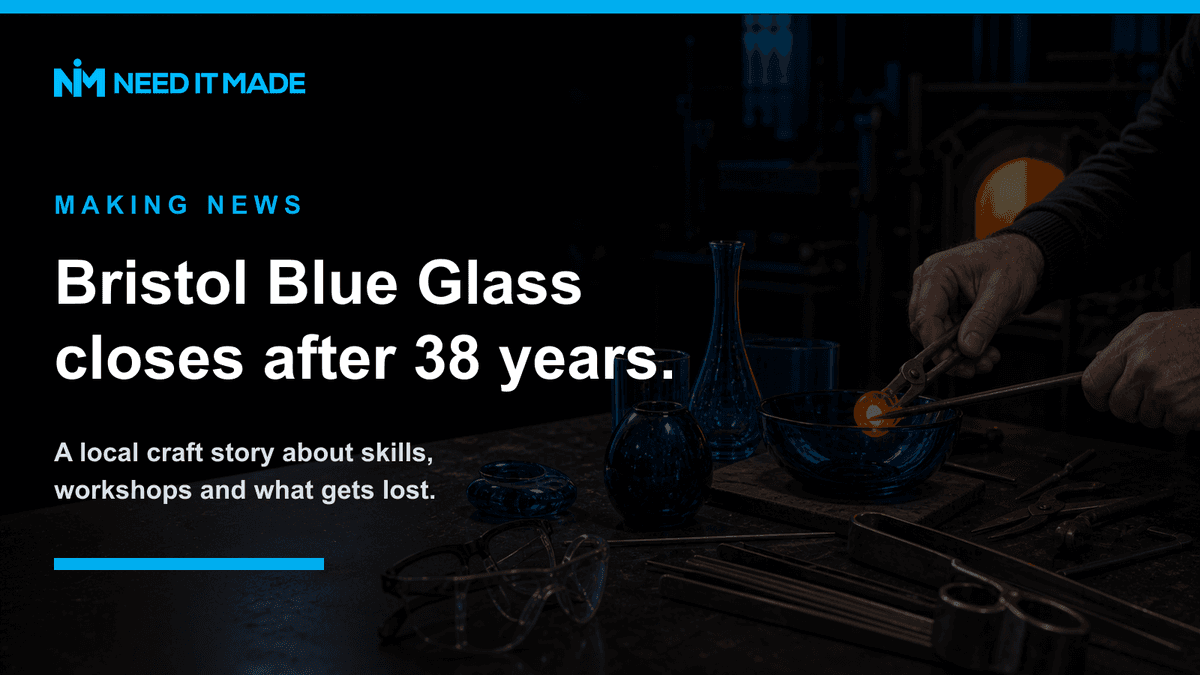
Bristol has lost one of its best-known heritage manufacturers following the permanent closure of Bristol Blue Glass.
The specialist glassmaker was established in 1988 to revive a Bristol tradition stretching back to the eighteenth century. After completing its final orders, the company switched off its kilns for the last time in June 2026.
Its handmade glass was recognised for its striking sapphire-blue colour, created by adding cobalt oxide during production. Every finished piece depended on specialist equipment, careful control of molten glass, and skills developed through years of practical experience.
More than the loss of a business
When a specialist manufacturer closes, we do not only lose a supplier. We risk losing knowledge, equipment, confidence, and a route into the craft for the next generation.
Recent reports say Bristol Blue Glass faced rising rent and fuel costs, refurbishment requirements, financial pressure, and ill health among its managing directors. More than 7,000 people reportedly signed a petition supporting the business, demonstrating the strength of the community around it.
That support could not ultimately overcome the practical challenges of keeping an energy-intensive, specialist manufacturing operation running.
Why specialist skills matter
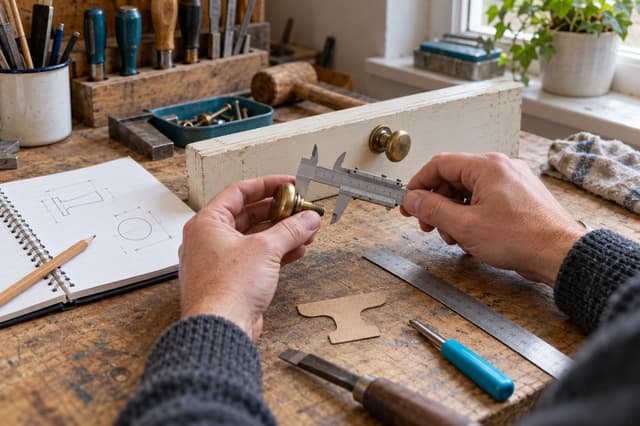
Many things people need cannot be bought from a shelf. A missing fitting from an old house, a replacement component for discontinued equipment, a faithful restoration, or the first prototype of a new idea may all require somebody with unusual tools and hard-earned skills.
Businesses such as Bristol Blue Glass show the value of that capability. They can take raw materials, ideas, and customer requirements and turn them into physical objects that would otherwise not exist.
Local manufacturing capability is difficult to replace once it disappears.
For customers, this is also a reminder that choosing a maker should not be based on price alone. Relevant experience, available equipment, communication, capacity, and a clear understanding of the job can all determine whether a project succeeds.
Helping people find the right maker
Across Bristol and the wider UK, skilled makers continue to work in professional factories, independent workshops, garages, sheds, studios, and spare rooms. Many have the ability to solve unusual problems but can be difficult for customers to discover.
Need It Made exists to make that connection easier. Customers can describe what they need designed, manufactured, repaired, restored, or replicated. Makers can then ask questions and bid for projects that match their skills and interests.
Supporting specialist makers means more unusual things can be repaired rather than discarded, more ideas can become prototypes, and more practical knowledge can continue to be used.