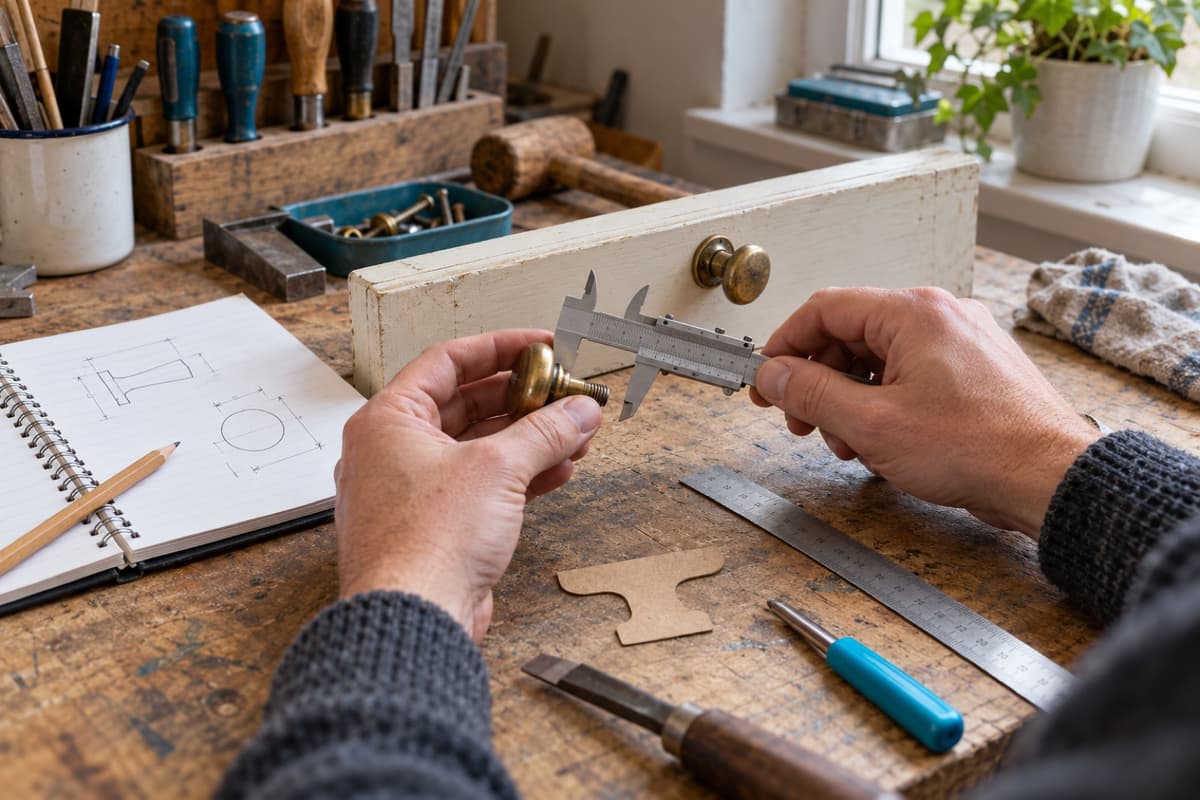
The difference between an object that looks right and one that actually fits can be a fraction of its size. A replacement knob may resemble the original but use the wrong thread. A shelf can match a photograph yet miss a pipe, socket or uneven wall. A prototype can have the correct overall length while placing one critical hole a few millimetres away from where it needs to be.
These are not glamorous problems. They are measurement problems, and they sit at the centre of making.
That makes a current Innovate UK funding pilot worth noticing. UK-registered micro, small and medium-sized businesses can apply for a share of up to £1 million to develop measurement, instrumentation or sensing products and services for UK manufacturing. The opportunity opened on 26 August 2026 and is due to close on 7 October 2026.
The pilot concerns advanced manufacturing technology, not ordinary household Projects. Even so, it points to a principle that travels from national laboratories to small workshops: progress depends on being able to compare an intention with what is physically there.
A measurement has a purpose
It is tempting to begin by measuring everything. A better first question is what the measurement needs to decide.
If a Maker is reproducing a broken bracket, the outside appearance might matter less than the distance between mounting holes, the space available behind it and the direction of the load. If the Project is a box for an existing object, internal clearance may matter more than the external size. If something must pass through a doorway, the route to its final position matters as much as the space waiting for it.
This is why a long list of numbers can still be an incomplete brief. Measurements need context. A dimension should make clear where it starts and ends, which object or surface it belongs to, and whether it is fixed, approximate or open to adjustment.
Fit is a relationship, not a single number
Suppose a Customer measures an opening as 200 millimetres wide. That does not automatically mean a 200-millimetre part should be made for it. The opening may vary from top to bottom. Paint, fabric or an uneven edge may reduce the usable space. The part may need clearance to slide, rotate or be removed later.
The Maker therefore needs to understand the relationship between the new object and everything around it. This is where photographs, a simple sketch and several measurements become more useful together than any one of them alone.
A photograph can show obstructions and orientation. A sketch can show which points were measured. A note can explain that the left edge is uncertain or that the wall is not square. None has to be a formal engineering drawing. Their job is to make the physical situation visible enough for the Maker to ask better questions.
Uncertainty is useful information
People often present a dimension as exact because a tape measure displayed a particular number. The tool may be precise enough for the job, but the object may not be. Soft materials compress. Old furniture moves. Broken edges do not always show the original shape. Hand-cut features vary.
It is better to say “approximately 420 millimetres” than to give false confidence. Mark which measurements are reliable, which came from a damaged area and which need checking before material is cut.
The National Physical Laboratory's public measurement resources explain that measurement uncertainty is part of understanding what a result means. In a workshop, that does not require a statistical report for every simple job. It does require honesty about limits. A Maker can then decide whether to measure again, make a template, leave adjustment or produce a low-cost test piece first.
Templates can carry information better than words
Some shapes are difficult to describe numerically. Curves, irregular outlines and hole patterns can be easier to communicate with a physical template. Card, paper or a rubbing can capture a relationship that would otherwise need many measurements.
Templates still need care. Printing can introduce scaling errors. A photograph taken at an angle can distort shape. A paper outline may stretch or tear. A useful template should include at least one known check dimension so the Maker can confirm that it has not changed size.
For larger objects, a simple mock-up can test reach, proportion and movement. For a replacement part, a rough prototype may confirm fit before the final material and finish are committed. These steps are not waste when they answer a specific question early.
The Maker verifies what matters
Customer-supplied measurements are a starting point, not a guarantee. The Maker must decide what they need to verify for their process and the consequences of getting it wrong. Safety-critical, structural, electrical or regulated work may require qualified assessment, appropriate standards and specialist measurement. A marketplace brief cannot replace that expertise.
For an ordinary Project, the Maker may ask for another photograph with the tape measure visible, request the existing part by post, arrange to measure on site or propose an adjustable design. Those requests can feel like extra steps, but they often prevent material, time and money being committed to the wrong interpretation.
Measurement also continues after making begins. A cut part is checked. A joint is offered up. A prototype is tested against the object it must fit. The finished item is compared with the agreed requirements. Each check connects the original idea to physical evidence.
A useful measurement pack for a Project
Before uploading a Project, a Customer can make the brief stronger by including:
- one photograph showing the whole object or location;
- close photographs of interfaces, fixings and damaged areas;
- a sketch showing exactly where each dimension was taken;
- units written beside every number;
- at least one scale reference in photographs;
- notes identifying approximate, uncertain or inaccessible measurements;
- the existing part or a physical template, if it can be sent safely and legally; and
- the intended use, movement, load and surrounding conditions.
Not every Project needs every item. The aim is not to turn Customers into engineers. It is to give Makers enough reliable context to judge whether the Project fits their capabilities and what must happen next.
Need It Made connects those with a Project idea with those who can bring it to life. If your idea must fit a real object, room or person, show the Maker what you know, what you measured and what remains uncertain. Good measurement does not restrict making. It gives the making somewhere solid to begin.