For a one-off part, the printing itself is usually the cheap bit. What you mostly pay for is the design time needed to turn your idea, photo or broken original into a printable 3D file, plus finishing and postage. A recent job on Need It Made shows the split: a 3D model drawn from an embroidered badge, printed at about 250mm across, finished and posted, came to £247.50 in total.
What you are actually paying for
A quote for a single 3D printed part is built from five things:
- Design (CAD) time. If you do not already have a 3D file, someone has to model the part. For a one-off this is often the largest cost, because it is skilled work and nothing is shared across a batch.
- Print time and material. Bigger and denser parts take longer and use more plastic. For most household-sized parts the material itself costs pounds, not tens of pounds.
- Finishing. Removing supports, sanding, filling, priming or painting. Ask for it if the part will be seen or handled.
- Postage. A careful Maker packs a printed part well. On Need It Made, UK delivery is included in the price you see.
- The platform or service fee, if you go through one.
A real example: £247.50, broken down
A Customer wanted an embroidered emblem, a parachute with wings, turned into a 3D model about 250 x 250 x 30mm. He planned to use the print to make a silicone mould and cast the design in epoxy. He had no 3D file, only images of the badge.
The job went to Henry Hunt, a Maker in Staffordshire who does FDM 3D printing and 3D scanning. Before pricing, Henry asked what budget the Customer had in mind, because modelling an embroidery is a heavy CAD task. The Customer guessed around £200. Henry then asked three useful questions: whether making the mould would generate heat (which affects the choice of plastic), whether he wanted just the logo or the whole plaque, and whether he wanted the print finished for an extra £20. The answers shaped the quote.
Henry's quote was £225, covering:
- CAD modelling from the badge images, with a note that unclear parts of the embroidery would be estimated
- printing in PLA on an FDM printer at 40% infill, chosen so the print would stand up to mould-making
- £20 of post-processing
- UK postage
The Customer paid £247.50. That total included Need It Made's 10% fee, and Henry received his £225 in full. Payment was held until the part had been delivered.
It took about three weeks from payment to posting. Most of that was design rounds: when Henry shared an 85% render, the Customer spotted that the wings needed 12 feathers, not 6. Henry corrected the model before printing. The part arrived the day after it was posted.
If you already have a 3D file
If you can supply a print-ready file (STL, 3MF or STEP), you skip the design cost and pay mainly for printing, finishing and postage. Online print bureaus can price a file instantly, but many set a minimum order value, which can be more than a single small part is worth. A Maker with a desktop printer will often quote for just the one part.
If you only have a broken part or a photo
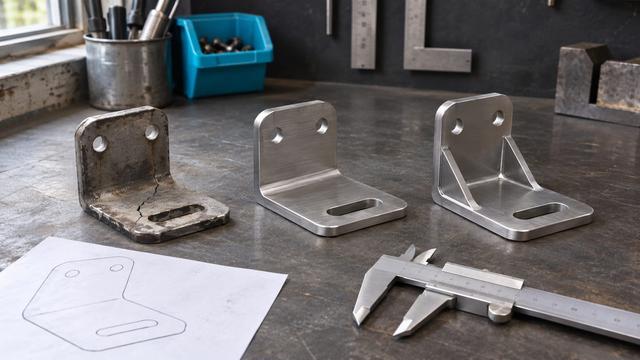
This is the common case for replacement parts, and it is where the design cost comes in. Recreating a part from a broken original is called reverse engineering. Design services usually charge it by the hour, so the price depends on how complex the part is and how much you can tell the designer up front. A Maker who models and prints the part in one job will usually quote a single fixed price, as in the example above.
To keep the design time down:
- photograph the part from several angles, with a ruler or tape measure in shot
- measure the critical dimensions yourself, especially holes, clips and anything that has to fit another part
- say whether you can post the original, because a Maker who can hold the part can measure it far more accurately
Which plastic, and does it change the price?
Material changes the price a little and the result a lot, so say what the part has to do:
- PLA is the cheapest and easiest to print. It suits display pieces, models and patterns like the mould master above, but it softens with heat.
- PETG is tougher and copes better with warmth and moisture. A common choice for functional household parts.
- ABS and ASA handle heat better again, and ASA stands up to sunlight outdoors. They are harder to print, so expect a slightly higher price.
If you are not sure, describe where the part lives and what it does (in a car, near a heater, outdoors, holding weight) and let the Maker recommend.
How long does it take?
Printing a small part takes hours. The calendar time is set by design and by how quickly questions get answered. A part from a ready file can often be printed and posted within days. A part that needs modelling, like the example above, can take a few weeks if you want to check a render before printing. That check is worth it, because a design fix costs nothing compared with a reprint.
How to get an accurate quote
Quotes come back faster and closer to the final price when the brief answers the Maker's questions up front:
- what the part is for, and what it fits or attaches to
- overall size and any critical dimensions
- photos, sketches or a file, if you have one
- how it will be used: heat, outdoors, load, food contact
- whether it needs finishing or painting
- how many you need
- your deadline and a rough budget
A rough budget is not a commitment. In the example above it helped Henry pitch the job, and his quote landed close to the Customer's own guess.
You can see the UK Makers who offer 3D printing and their work, or post what you need made on Need It Made and UK Makers can send you quotes. You pay only when you accept one, and your payment is held until the part is delivered.